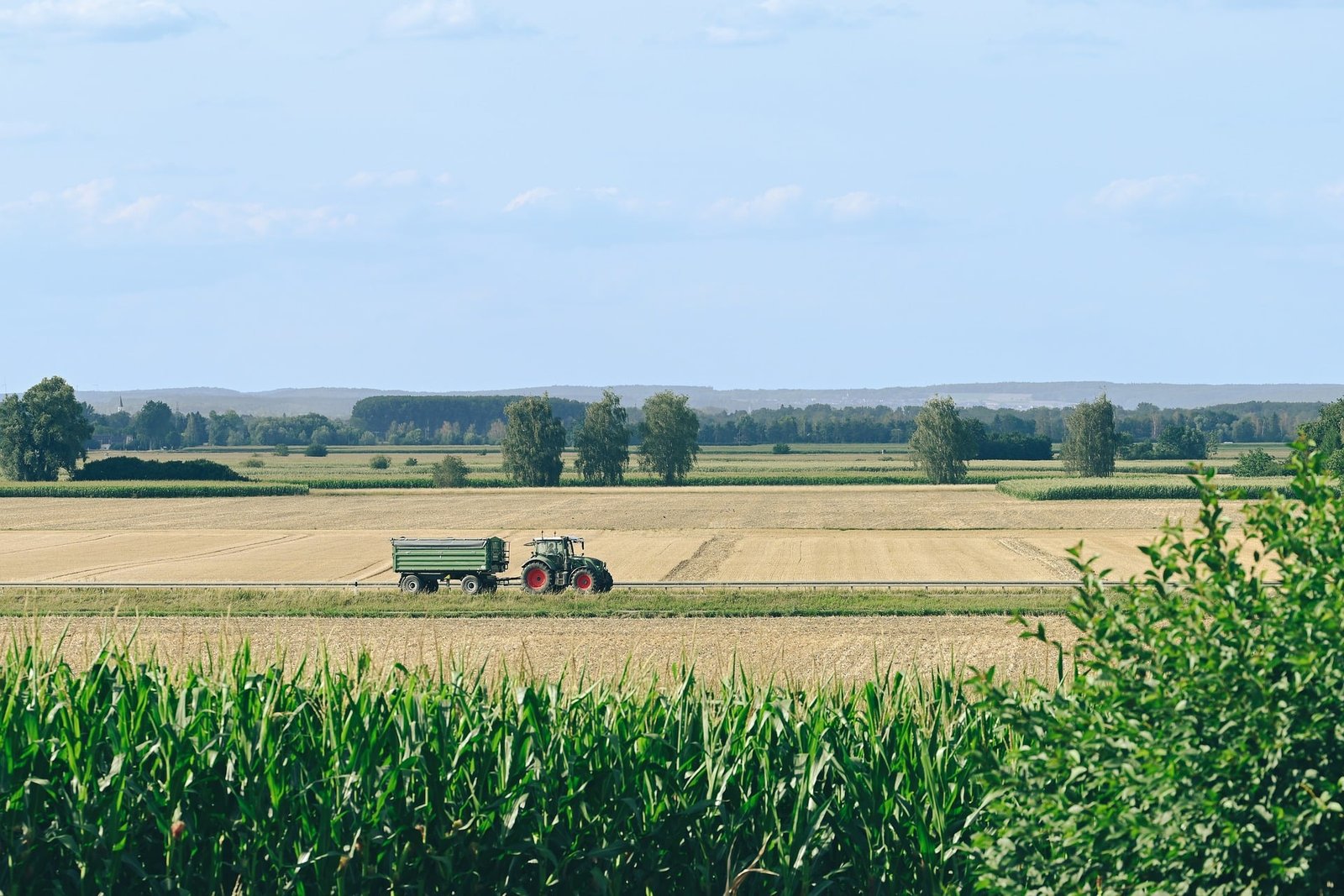
Artificial intelligence is no longer limited to chatbots, smartphones, and software. It is also becoming an important part of modern agriculture.
From monitoring crops with cameras and drones to predicting weather, detecting plant diseases, and optimizing irrigation, AI can help farmers make better decisions using real-time data.
This combination of agriculture and technology is often called AgTech, and AI is becoming one of its most useful tools.
In this article, we’ll look at how AI helps farmers, how AI-powered farming systems work, and what the future of smart agriculture could look like.
What Is AI in Agriculture?
AI in agriculture means using artificial intelligence, machine learning, computer vision, sensors, drones, satellites, and other technologies to analyze farming data and automate certain tasks.
A traditional farmer might inspect a field manually to determine whether crops need water or whether plants are becoming infected.
An AI-powered system can instead analyze information from:
- Soil sensors
- Cameras
- Drones
- Satellites
- Weather stations
- GPS systems
- Farm machinery
- Historical crop data
The system can then identify patterns and provide recommendations.
For example, instead of watering an entire field, an AI system could identify which sections are actually dry and need irrigation.
1. AI Can Detect Crop Diseases
One of the most interesting applications of AI in farming is plant disease detection.
Farmers can use cameras or smartphones to capture images of leaves and plants. Computer vision models can analyze those images and look for visual signs associated with diseases, pests, or nutrient deficiencies.
For example, an AI system might detect:
- Discolored leaves
- Spots or lesions
- Unusual growth
- Pest damage
- Fungal infections
- Signs of nutrient deficiency
Early detection is important because farmers may be able to address a problem before it spreads across a large part of the field.
This is similar to how computer vision technology is being used in other industries to identify objects and patterns automatically.
2. AI Helps Farmers Use Water More Efficiently
Water management is another major area where AI can be useful.
Instead of following a fixed irrigation schedule, an AI system can combine information from soil-moisture sensors, weather forecasts, crop conditions, and historical data.
It can then estimate when and where irrigation is needed.
For example:
Dry soil + high temperature + no expected rainfall = higher irrigation requirement
While:
Moist soil + expected rainfall = potentially lower irrigation requirement
This can help reduce unnecessary watering while ensuring crops receive the water they need.
Technology such as smart sensors and connected devices makes this type of automated monitoring possible.
3. AI Can Predict Crop Yields
Farmers need to estimate how much they are likely to produce because crop yields affect harvesting, storage, transportation, and sales.
AI can analyze historical information together with current field conditions to estimate potential yields.
Data can include:
- Crop type
- Weather conditions
- Soil characteristics
- Plant health
- Previous harvests
- Irrigation
- Fertilizer usage
- Satellite imagery
The resulting predictions are not guaranteed, but they can give farmers additional information when planning their operations.
This is one example of how machine learning works by finding patterns in large amounts of data.
4. AI Helps Monitor Large Farms
Walking through every part of a large farm can take a significant amount of time.
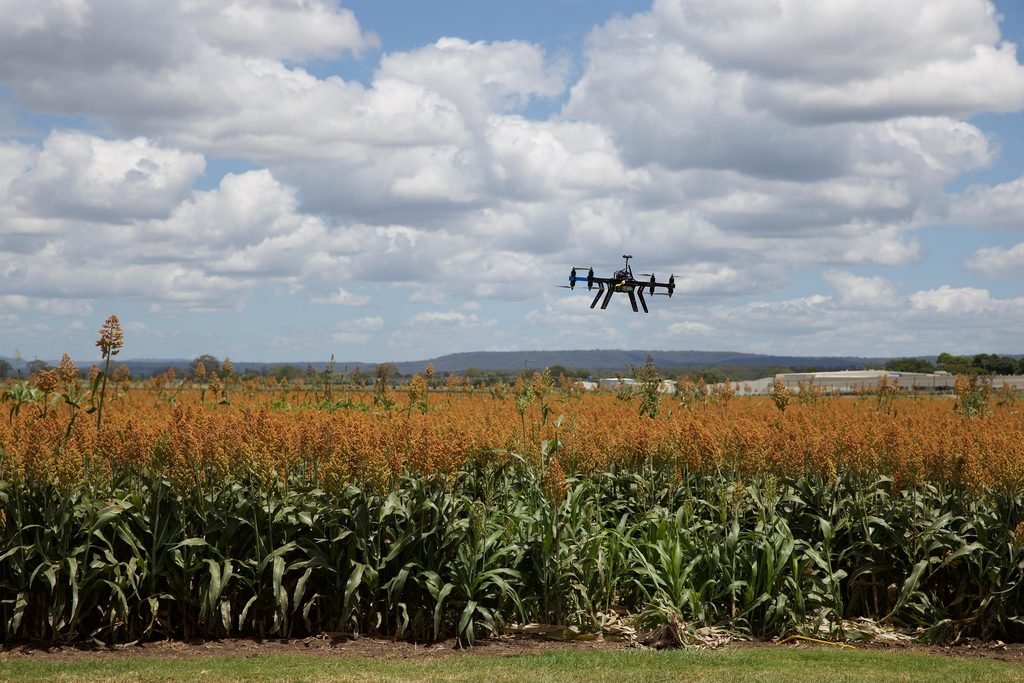
Drones and satellites can make this easier.
AI can process aerial images and identify differences between areas of a field.
For example, one section might show healthy vegetation while another section shows signs of stress.
Instead of manually inspecting the entire farm, the farmer can investigate the areas highlighted by the system.
This creates a workflow something like:
Drone/Satellite → Image → AI Analysis → Problem Detection → Farmer Action
The farmer remains responsible for deciding what to do, while AI helps process the information.
5. AI Can Help Control Pests
Pests can cause serious agricultural losses.
AI-powered cameras can monitor crops and identify insects or other signs of pest activity.
Some systems can combine image recognition with environmental information to estimate where pest problems may be developing.
This could allow farmers to focus treatment on affected areas rather than automatically treating an entire field.
That approach can potentially reduce unnecessary use of pesticides and other agricultural inputs.
6. AI Makes Agricultural Machinery Smarter
Modern tractors and agricultural machines can use GPS, cameras, sensors, and AI to perform increasingly sophisticated tasks.
AI-assisted machinery can help with things such as:
- Navigation
- Field mapping
- Crop monitoring
- Automated steering
- Weed detection
- Precision planting
- Harvesting
Some agricultural robots can use computer vision to distinguish crops from weeds.
Instead of treating every plant equally, the system can identify specific targets.
This concept is part of precision agriculture, where technology is used to manage different areas of a farm according to their individual conditions.
7. AI Helps With Weather and Farming Decisions
Weather has always been extremely important to agriculture.
Rain, temperature, humidity, wind, and extreme weather can affect planting, irrigation, spraying, and harvesting.
AI can process weather information together with farm-specific data to help farmers understand potential conditions.
For example, a farmer may need to decide whether to:
- Irrigate a field
- Apply fertilizer
- Spray crops
- Harvest
- Delay planting
AI-based forecasting tools can provide additional information for these decisions.
However, weather predictions are still predictions. AI cannot completely eliminate uncertainty.
8. AI Can Detect Weeds
Weeds compete with crops for water, nutrients, sunlight, and space.
Traditionally, farmers may apply herbicides across large areas.
AI-powered cameras can instead examine individual plants and classify them as crops or weeds.
A smart machine could theoretically follow a process such as:
Camera → Identify plant → Classify crop/weed → Target weed → Apply treatment
This is particularly interesting because it combines AI, robotics, computer vision, and precision agriculture.
9. AI Helps Farmers Analyze Soil
Healthy soil is essential for agriculture.
AI systems can analyze information collected from soil sensors and laboratory tests to help farmers understand conditions such as:
- Moisture
- Nutrient levels
- pH
- Temperature
- Soil composition
This information can be combined with crop data to support decisions about irrigation, fertilization, and planting.
Instead of treating an entire field as if it were identical, farmers can create more detailed maps showing how soil conditions vary across different areas.
10. AI and Agricultural Robots
Agricultural robots are another developing area of AgTech.
Robots can potentially assist with repetitive tasks such as:
- Weeding
- Planting
- Harvesting
- Crop monitoring
- Fruit picking
- Soil inspection
AI provides the intelligence needed to understand the environment.
For example, a harvesting robot needs to determine:
Where is the fruit? Is it ripe? Can the robot safely reach it?
Computer vision and machine learning can help answer these questions.
This is similar to the way robots in other industries use sensors and AI to interact with physical environments.
Does AI Replace Farmers?
No. AI does not automatically replace the farmer.
Agriculture involves many decisions that require experience, physical inspection, local knowledge, and judgment.
AI is better understood as a decision-support and automation technology.
A farmer can use AI to receive information about crop health, soil conditions, weather, or potential problems and then decide what action makes sense.
The relationship can look like:
AI collects and analyzes data → Farmer interprets the information → Farmer makes the decision
This human-and-AI approach is likely to remain important as agricultural technology develops.
What Are the Benefits of AI in Agriculture?
AI can potentially help farmers with:
| Area | How AI Can Help |
|---|---|
| Crop health | Detect diseases and plant stress |
| Irrigation | Estimate water requirements |
| Pest control | Identify pest activity |
| Weeds | Distinguish weeds from crops |
| Weather | Analyze weather information |
| Yield | Estimate potential production |
| Machinery | Enable smarter automation |
| Soil | Analyze soil conditions |
| Monitoring | Process drone and satellite images |
| Harvesting | Assist agricultural robots |
The biggest advantage is not simply automation. It is the ability to process large amounts of information and turn it into useful insights.
What Are the Problems With AI Farming?
AI-powered agriculture also has limitations.
High Costs
Advanced sensors, drones, autonomous machinery, and AI systems can be expensive, particularly for smaller farms.
Internet and Infrastructure
Some smart farming systems depend on reliable connectivity, cloud services, or modern infrastructure.
This can be difficult in rural areas with limited connectivity.
Data Quality
AI depends heavily on data.
Poor-quality sensor readings, incomplete datasets, or inaccurate images can lead to poor recommendations.
Technical Knowledge
Farmers may need training to operate and understand increasingly complicated technology.
AI Is Not Always Correct
An AI recommendation should not automatically be treated as fact. Environmental conditions can change quickly, and agricultural decisions often require human judgment.
What Does the Future of AI Farming Look Like?
The future could involve farms where multiple technologies work together.
Imagine a farm equipped with:
Soil sensors + drones + weather data + AI + autonomous machinery + agricultural robots
Sensors continuously collect information.
AI analyzes the data.
Drones inspect crops.
Robots perform certain physical tasks.
Farmers monitor everything through a dashboard and make important decisions.
This could make farming more data-driven, automated, and precise.
AI may become especially useful as farmers face challenges involving water availability, changing weather patterns, labor requirements, crop diseases, and the need to produce more efficiently.
Final Thoughts
So, how does AI help farmers?
It helps by turning large amounts of agricultural data into information that farmers can use.
AI can help detect crop diseases, monitor fields, manage irrigation, identify weeds and pests, estimate yields, analyze soil, improve machinery, and support agricultural robots.
The technology isn’t about removing farmers from agriculture. Instead, it can give farmers better tools for understanding what is happening across their fields.
And just as AI is changing software, healthcare, and other industries, agriculture is becoming another major area where intelligent technology is being integrated into everyday work.
FAQs
How does AI help farmers?
AI helps farmers analyze crop, soil, weather, and field data. It can assist with disease detection, irrigation, pest monitoring, yield prediction, and agricultural automation.
Can AI detect plant diseases?
Yes. Computer vision systems can analyze images of plants and identify visual patterns associated with certain diseases and crop problems.
Can AI reduce water usage in farming?
AI can help estimate irrigation requirements using soil moisture, weather, crop conditions, and other data. This may help farmers avoid unnecessary irrigation.
Can AI replace farmers?
AI can automate certain tasks and provide recommendations, but farming still requires human judgment, experience, and physical decision-making.
What is precision agriculture?
Precision agriculture uses technologies such as GPS, sensors, drones, satellite imagery, and AI to manage crops and farmland more precisely.
Is AI farming expensive?
Advanced AI systems can be expensive because they may require sensors, cameras, drones, specialized machinery, software, and connectivity. Costs vary considerably depending on the technology.